Borderlands: Studying politics near the Russian border
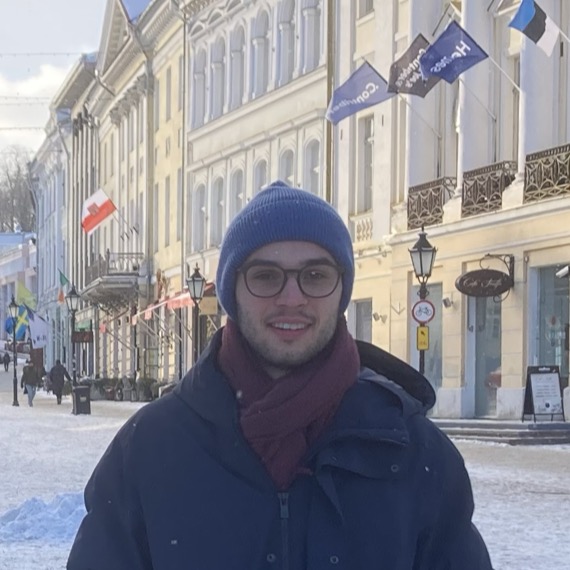
Valentin Schneuwly is a political science student at the University of Bern. He spent a semester studying at the University of Tartu, Estonia. Valentin experienced first-hand how the war in Ukraine is causing tensions that can be felt in Estonian domestic politics, on campus and in everyday life.
Why did you choose the University of Tartu?
I’m a political science student and I wanted to learn more about Estonian culture, history and politics. Estonia is part of the EU and NATO, and it shares a border with Russia. I also wanted to earn credits that would count towards my Master’s degree, and I wanted to go somewhere with similar semester dates to the University of Bern.[1]
Tartu is close to the Russian border. How have you experienced this?
Since the outbreak of the war in Ukraine, the shared border with Russia has caused a series of tensions. There is the geopolitical tension between Russia and NATO. On the other hand, there are tensions between the Estonian-speaking majority and the Russian-speaking minority.
The place where I felt this most was when I visited Narva, which is right on the Russian border. Most people there speak Russian. It is one of the poorest regions in Estonia. I noticed many buildings dating back to Soviet times. Everywhere else in Estonia people speak English very well – not here. Narva feels very far away from the urban and high-tech worlds of Tallinn and Tartu.
Is the war in Ukraine noticeable in everyday life?
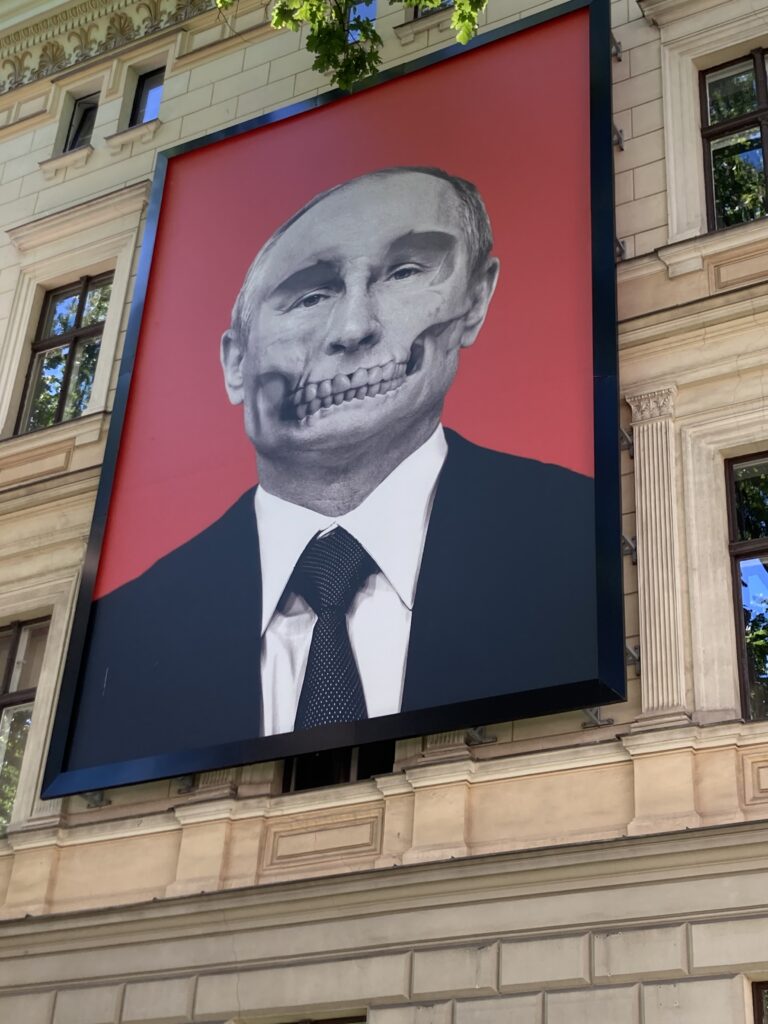
There is a lot of solidarity with Ukraine throughout the Baltic countries. I noticed lots of Ukrainian flags on the university campus, and there are many fundraising events for Ukraine. I saw many protests in front of Russian embassies during my travels. In Latvia, they even changed the name of the road on which the Russian embassy in Riga is located – its new address is now “Ukrainian Independence Street 2”. Opposite the embassy, they hung up a huge picture of the Russian president, Wladimir Putin, with his face distorted into a skull.
Is studying in Tartu different from what you’re used to?
In many ways, it is very similar to what we are used to in Bern: most buildings are modern and all facilities are excellent. One difference is that lectures and seminars are separate in Bern, whereas in Tartu, I took lectures that combined the two formats. These include interactive, seminar-style activities after the lecture, such as student presentations.
What were your courses like in Tartu?
The University of Tartu offers more classes on EU policymaking than we do in Bern. Being a member of the EU helps Estonia to remain independent. People often say: “We remember what it was like to live in the Soviet Union”. Estonia reformed its economy with measures that caused suffering, but people were willing to accept this because of their Soviet past and out of fear of Russia. I also took a very critical class on Russian foreign policy, in which I learnt a great deal about its relationship with the Middle East and the other BRIC countries.[2]
Has the exchange changed your view of Switzerland?
Singing is very important in the Estonian culture and history. I went to an Estonian folk song festival with around 32,000 singers and 100,000 spectators. The atmosphere was indescribably beautiful. Songs are passed from one generation to the next, and they remain very popular with young people. In contrast, our national traditions, such as yodelling or Swiss wrestling, are often most popular with a specific age group. I wish more young people in Switzerland would participate in our national traditions with the same enthusiasm as young Estonians.
[1] Editor’s note: The University of Tartu and the University of Bern are both members of the ENLIGHT university alliance. Questions concerning syllabus, module recognition and grades should always be discussed with the relevant departmental coordinator at the University of Bern.
[2] Editor’s note: BRICS: Brazil, Russia, India and China.
Interview: Caspar Bienek
Images and Video: Valentin Schneuwly